"Never be built out": views, property features and misleading conduct by agents
A view is worth real money on the Sunshine Coast and in Moreton Bay — often a six-figure premium over the identical house one street back. So it matters enormously when a buyer is told the outlook can never be built out, the deck is council-approved, the block runs to the fence line, or the second dwelling is legally lettable, and it turns out none of that is true. Statements like these are not sales puffery. Where they are wrong, they can be misleading or deceptive conduct under the Australian Consumer Law, and the buyer may have rights against the agent, the agency and sometimes the seller — even after settlement. This guide explains where the line sits in Queensland, what buyers should do before and after signing, and how agents keep themselves out of the firing line.
Written by Michael Klein, Legal Practice Director, admitted 2003 · General information about Queensland law · Last reviewed 2026
Need advice on your own matter? Book a no-obligation consultation with Coastside Law in Golden Beach.
The law in short
Section 18 of the Australian Consumer Law (Schedule 2 to the Competition and Consumer Act 2010) prohibits a person, in trade or commerce, from engaging in conduct that is misleading or deceptive or likely to mislead or deceive. Section 30 goes further for land specifically: it prohibits false or misleading representations about the nature of an interest in land, the price payable, the location of land, the characteristics of land, and the use to which land is capable of being put.
Three features of this make it powerful for a buyer. There is no need to prove the agent intended to mislead — an honest mistake, confidently stated, is enough. Liability attaches to the person who made the statement, so the agent and the agency are exposed in their own right, not only the seller. And the remedy is damages under section 236 or the broader orders available under section 237, which can include varying or setting aside the contract, so the right does not necessarily die at settlement.
Queensland adds a licensing layer. The Property Occupations Act 2014 makes it an offence for a property agent to represent anything false or misleading in connection with the sale of property, and the Office of Fair Trading can act on the agent's licence. A claim in negligent misstatement may also be available where the agent assumed responsibility for the accuracy of what they said.
Puffery versus a representation
Not everything an agent says is actionable. "Stunning outlook", "the best street in Golden Beach" and "a rare opportunity" are puffery — vague, obviously subjective, and not capable of being proved true or false. The courts have long accepted that buyers discount that kind of talk.
The line is crossed when the statement is specific, factual and capable of being checked. Compare the two columns in your head: "lovely water views" is puff; "that reserve is council land, it can never be built on" is a representation of fact about the characteristics and permitted use of neighbouring land. The second is the sort of statement people rely on when they decide what to bid.
- "The view can never be built out" — a representation about zoning, height limits or the status of the land in front. Almost always checkable, and frequently wrong.
- "The deck and the shed are council-approved" — a representation about approvals that a building record search will confirm or destroy in a day.
- "The block is 800 square metres and goes to the back fence" — area and boundary statements, testable against the registered plan and a survey.
- "You can rent the downstairs flat out separately" — a representation about permitted use, governed by the planning scheme and often by the body corporate by-laws.
- "It's never flooded" — a representation about history and risk, contradicted by flood mapping and, increasingly, by insurers.
- "Body corporate levies are about $900 a quarter" — a figure, not an impression. If it is materially understated, it is a misrepresentation about the price payable for the interest.
- "There's approval for a second storey" — approvals lapse. A lapsed or never-lodged approval stated as current is a classic.
Views: the most expensive representation in coastal Queensland
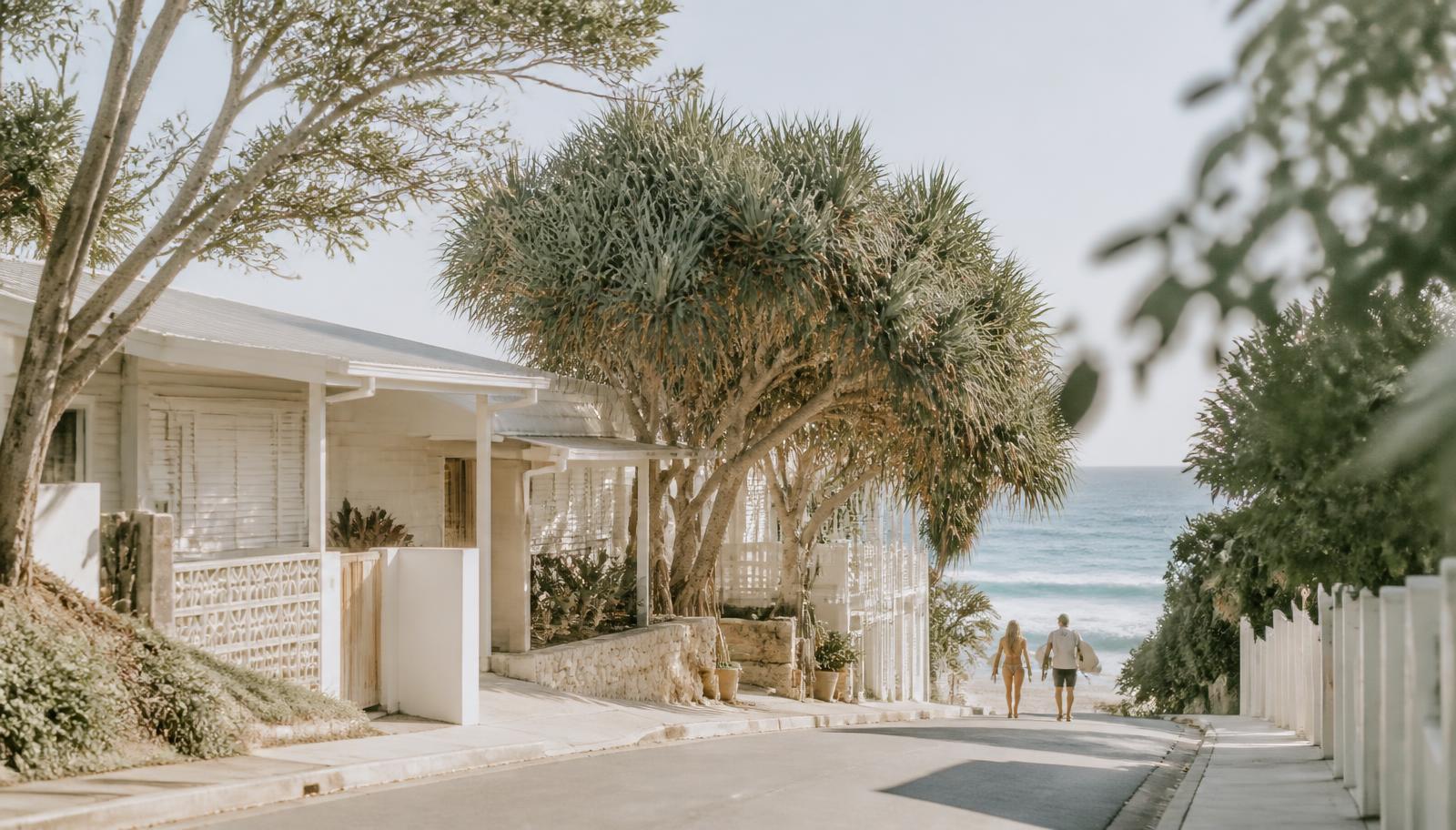
View claims are the ones we see most often on the Sunshine Coast, and they cause the most loss because the premium is baked into the purchase price. There is no such thing as a legally protected private view in Queensland. Nothing in the title guarantees an outlook. What actually protects a view is the planning scheme applying to the land in front: its zoning, its building height limits, whether it is park, reserve or road, and whether any of that can be changed by a development application.
That is why the confident statement is so dangerous. A vacant lot may be capped at two storeys today and the subject of a live application for six. A grassed strip may look like a park and be a drainage reserve that can carry a pump station. Land held by a neighbour with no current plans is not a protection at all. An agent who says the outlook is safe is making a planning representation, and in a sale of a view property the loss flowing from getting it wrong is measured by the difference in value between the property as represented and the property as it is.
- Ask which lot the view is over, then look it up. Council's planning scheme mapping shows the zone and the maximum building height for that specific lot.
- Check whether there is a current or recent development application over it on council's development register. Applications are public.
- Reserve, park and esplanade land is safer than private land, but it is not immunity — public land can be built on, and reserves can be revoked.
- If the outlook is genuinely central to what you are paying, protect it in the contract rather than in conversation. A special condition making the contract subject to your solicitor's satisfaction with the planning status of a nominated lot is easy to draft and costs nothing.
- Photograph the outlook on inspection day and keep the marketing material. If a dispute follows, what was advertised is evidence.
Contract clauses that try to shut the argument down
Every standard REIQ contract contains an entire agreement clause and an acknowledgement that the buyer has not relied on any representation made by or on behalf of the seller. Agents sometimes treat these as a complete answer. They are not.
A party cannot contract out of the Australian Consumer Law. A non-reliance clause is evidence going to whether the buyer in fact relied on what they were told — sometimes strong evidence — but it does not extinguish a statutory claim, and it does not help the agent at all where the claim is brought against the agent personally rather than under the contract with the seller. What the clause does do is make the buyer's contemporaneous record decisive, which is the practical reason to keep the listing page, the text message and your own file note.
The same goes for disclaimers on marketing material. Boilerplate stating that all information is from sources believed reliable and buyers should make their own enquiries has repeatedly failed to protect agents who made specific factual statements. A general disclaimer does not neutralise a particular assertion.
What a buyer should do before signing
Almost every one of these disputes was preventable in the week before contract, for the price of some searches. The Form 2 seller disclosure statement introduced in August 2025 helps, but it does not cover an agent's verbal claims about the neighbouring land or the future of a view.
- Get anything that matters put in writing. "Can you just confirm that by email?" is the single most useful sentence a buyer can say, and a reluctance to do it tells you something.
- Order the searches that match the promise: building approval records for structures, a planning and development search for use and height, a survey where boundaries or area matter, a body corporate search for levies and by-laws, and flood mapping.
- Have the contract and the disclosure package reviewed before you sign. Our review is free, and we look specifically at whether the features you are paying for are actually secured.
- Where a feature is fundamental, use a condition rather than trust. Subject to survey, subject to satisfactory building approval records, subject to planning enquiries — all ordinary, all accepted.
- Keep the evidence trail: the listing as it appeared, the brochure, the emails and texts, and a dated note of what was said at the inspection and by whom.
What a buyer can do after the truth comes out
The right response depends on when you find out. Before settlement, there may be room to terminate or renegotiate — under a contract condition, under the seller disclosure provisions in section 104 of the Property Law Act 2023 if the defect touches the disclosure statement, or by agreement once the seller understands their own exposure. After settlement, the contract is generally performed and the realistic claim is for damages against whoever made the statement.
Damages under section 236 are usually measured as the difference between what you paid and what the property was actually worth given the true position, which normally requires a retrospective valuation. There is a six-year limitation period from when the loss was suffered. Contributory conduct can reduce an award where the buyer failed to make obvious enquiries, so the buyer who was told the shed was approved and never searched will not necessarily recover in full.
- Act early. Rights before settlement are far broader and far cheaper to exercise than a damages claim afterwards.
- Preserve the record immediately — screenshot the online listing before it is taken down, and save the marketing material and correspondence.
- Get the true position documented: a search, a council response, a surveyor's report, a valuation of the property as it truly is.
- Consider all the defendants. The agent, the agency and the seller may each be liable, and agencies carry professional indemnity insurance.
- QCAT has jurisdiction over many claims involving property agents, and the Office of Fair Trading can pursue disciplinary action and, in some cases, compensation from the claim fund. A complaint is not a substitute for a civil claim, but it is a genuine source of pressure.
- Weigh the commercial reality. If the loss is $20,000, a Supreme Court proceeding is not the answer; a well-evidenced letter of demand to the agency very often is.
For agents and agencies: how to stay out of it
Most agents who end up in one of these disputes did not lie. They repeated what the seller told them, or they said what they genuinely believed about the vacant block opposite. That is precisely the trap in section 18 — good faith is not a defence.
- Attribute, do not assert. "The seller tells us the deck was approved in 2016" is a materially different statement from "the deck is approved".
- Never make planning predictions. "We can't tell you what can be built there — council's mapping shows the zoning and height limit and your solicitor should check it" is accurate and takes ten seconds.
- Use the seller's documents, not your recollection. Land area comes from the title search. Levies come from the body corporate certificate. Approvals come from council records.
- Correct errors in writing the moment you find them, before the buyer signs. A corrected representation is rarely actionable; an uncorrected one usually is.
- Keep the file. When a claim arrives eighteen months later, the agency that can produce the email trail is in a completely different position from the one relying on memory.
How we help
Our work here is preventative, not litigious. We do not run misleading conduct litigation. For buyers, the cheapest version of this problem is the one we catch before you sign — which is why our pre-signing contract review is free, and why we ask what you were told, not just what the contract says. For sellers and agencies, we advise on how listings and disclosure should be worded so that a genuine mistake does not become a liability. If a dispute has already gone past the point of negotiation, we will say so and point you to a litigation specialist.
- Free pre-signing contract and disclosure review for buyers across the Sunshine Coast, Moreton Bay and Wide Bay.
- Special conditions protecting the specific feature you are paying for — view, boundary, approval, permitted use.
- Advice on termination and renegotiation where a misrepresentation surfaces before settlement.
- Where a problem only surfaces after settlement, an initial view on where you stand and a referral to an experienced litigation solicitor — we do not run court proceedings ourselves.
- Risk reviews and training for agencies on listing copy, verbal representations and record keeping.
Misleading claims about property features — common questions
The agent told me the view could never be built out and now a development is going up. Do I have a claim?
Possibly. A statement that land cannot be built on is a representation of fact about the characteristics and permitted use of that land, not puffery. If it was wrong, if you relied on it, and if you paid more than the property is worth without the view, that is the shape of a claim under section 18 and section 30 of the Australian Consumer Law against the agent and the agency. The evidence of what was said, and when, decides most of these cases.
Is there any legal right to a view in Queensland?
No. There is no easement of view at general law in Queensland and nothing in your title protects an outlook. What protects a view in practice is the planning scheme applying to the land in front — its zoning and building height limits — and that can change through a development application.
Does the 'no reliance' clause in the REIQ contract stop me suing?
No. You cannot contract out of the Australian Consumer Law, and a claim against the agent personally is not a claim under the contract at all. The clause is evidence going to whether you actually relied on what you were told, so it makes your own written record important, but it is not a bar.
What is the difference between sales puffery and a misrepresentation?
Puffery is vague, subjective praise that no reasonable buyer treats as a statement of fact — "stunning", "the best in the street". A misrepresentation is specific and checkable: land area, approvals, levies, flood history, zoning, permitted use. If it can be proved true or false with a search, it is not puffery.
Can I still do anything after settlement?
Yes, but the remedy changes. Before settlement you may be able to terminate or renegotiate. After settlement the usual claim is damages, measured as the difference between what you paid and the property's true value, with a six-year limitation period running from when the loss was suffered.
Who do I claim against — the agent or the seller?
Often both, and the agency as well. Liability under the Australian Consumer Law attaches to whoever made the misleading statement, so an agent is personally exposed for their own words. Agencies carry professional indemnity insurance, which is frequently the practical source of any recovery.
Does the new seller disclosure statement cover this?
Only partly. The Form 2 regime that commenced on 1 August 2025 covers prescribed matters the seller must disclose, and a material inaccuracy can give a right to terminate before settlement. It does not cover an agent's verbal claims about the neighbouring land, the future of a view, or what you could do with the property.
How do I check a view before I buy?
Identify the lot the view is over, then check the council planning scheme mapping for its zone and maximum building height, and search the development register for current applications. If the view is central to the price, add a special condition making the contract subject to your solicitor's satisfaction with the planning status of that lot.
What should I do first if I think I was misled?
Preserve the evidence before it disappears — screenshot the online listing, save the brochure, the emails and the texts, and write a dated note of what was said and by whom. Then call us on 0488 340 853 with the contract. If settlement has not happened yet, your options are much wider and time genuinely matters.
This guide is general information about Queensland law, current at the time of writing. It is not legal advice and does not take your circumstances into account. Call Coastside Law on 0488 340 853 for advice on your own matter.
Related questions
The questions people usually ask next on this topic.
- How much does conveyancing cost in Queensland?
- How long is the cooling-off period in Queensland?
- What if the building and pest report is bad?
Keep reading
Next steps
Where to go from here if this is your situation.
- 1Fixed-fee conveyancingBuying or selling on the Sunshine Coast — $990 to sell, $1,499 to buy, both incl. GST.See how we help
- 2Check the fixed feeExactly what our conveyancing costs, what is included, and what the third-party disbursements are.View our fees
- 3Talk it throughA short, no-obligation conversation with a lawyer at our Golden Beach office.Request a consultationCall 0488 340 853
Prefer to browse first? All legal guides